Healthcare Compliance Guide
A practical introduction to healthcare compliance, key regulatory requirements, and best practices for maintaining a compliant, patient-focused organization.
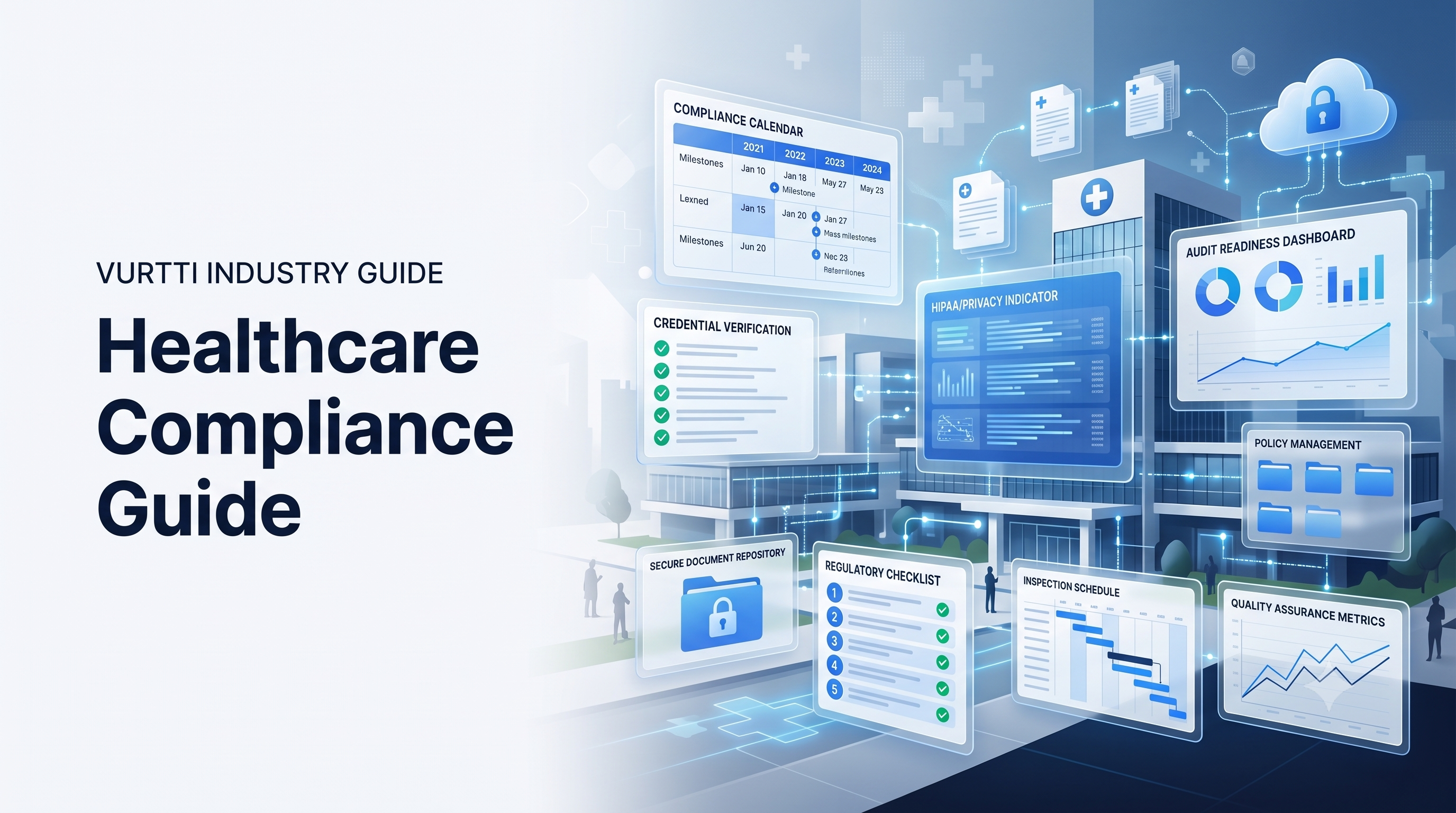
Introduction
Healthcare is one of the most highly regulated industries in the world. Hospitals, physician practices, clinics, long-term care facilities, pharmacies, laboratories, and other healthcare organizations must comply with a wide range of federal, state, and local regulations designed to protect patients, safeguard sensitive information, and promote quality care.
Managing these requirements can be challenging. Organizations are responsible for tracking licenses, certifications, employee training, privacy requirements, inspections, policy reviews, and countless recurring obligations. A structured compliance program helps reduce risk, improve operational efficiency, and ensure that patient care remains the organization's highest priority.
What Is Healthcare Compliance?
Healthcare compliance is the process of ensuring that a healthcare organization operates in accordance with applicable laws, regulations, accreditation standards, contractual obligations, and internal policies. Compliance programs are designed to promote ethical practices, protect patients, reduce fraud and abuse, and ensure that healthcare services are delivered safely and responsibly.
Compliance is not limited to one department. It involves leadership, clinical staff, human resources, finance, information technology, legal teams, and operational personnel working together to maintain consistent standards across the organization.
Key Areas of Healthcare Compliance
While requirements vary depending on the type of healthcare organization, most compliance programs focus on several core areas:
Patient privacy and confidentiality
Employee licensing and credentialing
Continuing education and required training
Clinical documentation and medical records
Billing and reimbursement compliance
Workplace safety and infection control
Policy and procedure management
Internal audits and quality assurance
Vendor and third-party oversight
Regulatory reporting and inspections
Organizations that actively monitor these areas are better positioned to reduce compliance risks and maintain high-quality patient care.
Common Compliance Challenges
Healthcare organizations face unique operational challenges that make compliance particularly complex. Regulations frequently change, documentation requirements continue to grow, and organizations often manage multiple facilities, departments, and professional disciplines simultaneously.
Some of the most common challenges include:
Tracking employee licenses and certifications
Managing recurring training requirements
Maintaining complete and accurate documentation
Protecting patient information
Preparing for accreditation surveys and regulatory inspections
Coordinating compliance activities across multiple departments
Keeping policies current with changing regulations
Without centralized oversight, these responsibilities can quickly become difficult to manage.
Best Practices for Healthcare Compliance
Organizations can strengthen their compliance programs by adopting proactive processes rather than reacting to issues after they occur.
Effective healthcare organizations typically:
Maintain a centralized compliance calendar
Assign clear ownership for recurring obligations
Conduct regular internal audits and self-assessments
Keep policies and procedures up to date
Maintain organized compliance documentation
Monitor employee training and certification status
Review regulatory changes regularly
Foster a culture of accountability and ethical decision-making
These practices help organizations remain prepared for audits, inspections, and accreditation reviews throughout the year.
How Technology Supports Healthcare Compliance
As healthcare organizations grow, manual tracking through spreadsheets, email reminders, and paper files becomes increasingly difficult. Modern compliance platforms help centralize compliance activities, automate recurring reminders, organize documentation, and provide leadership with real-time visibility into organizational compliance.
Technology also improves collaboration between departments by ensuring that responsibilities, deadlines, and supporting documentation are accessible from one secure location.
How Vurtti Helps
Vurtti helps healthcare organizations simplify compliance management by centralizing recurring obligations, documentation, task ownership, and reporting within a single platform.
With Vurtti, healthcare teams can:
Track licenses, certifications, and recurring deadlines
Automate reminders for training and regulatory requirements
Organize policies and supporting documentation
Assign compliance responsibilities across departments
Monitor progress through real-time dashboards
Improve audit and accreditation readiness
By replacing disconnected processes with a centralized compliance management system, healthcare organizations can spend less time managing administrative tasks and more time focusing on delivering quality patient care.
Final Takeaway
Healthcare compliance is an ongoing commitment to patient safety, ethical operations, and regulatory responsibility. Organizations that establish clear processes, maintain organized documentation, monitor recurring obligations, and embrace modern compliance technology are better equipped to reduce risk and adapt to an evolving regulatory environment.
A proactive compliance program not only supports regulatory compliance—it strengthens operational performance, improves accountability, and builds greater confidence across the organization.