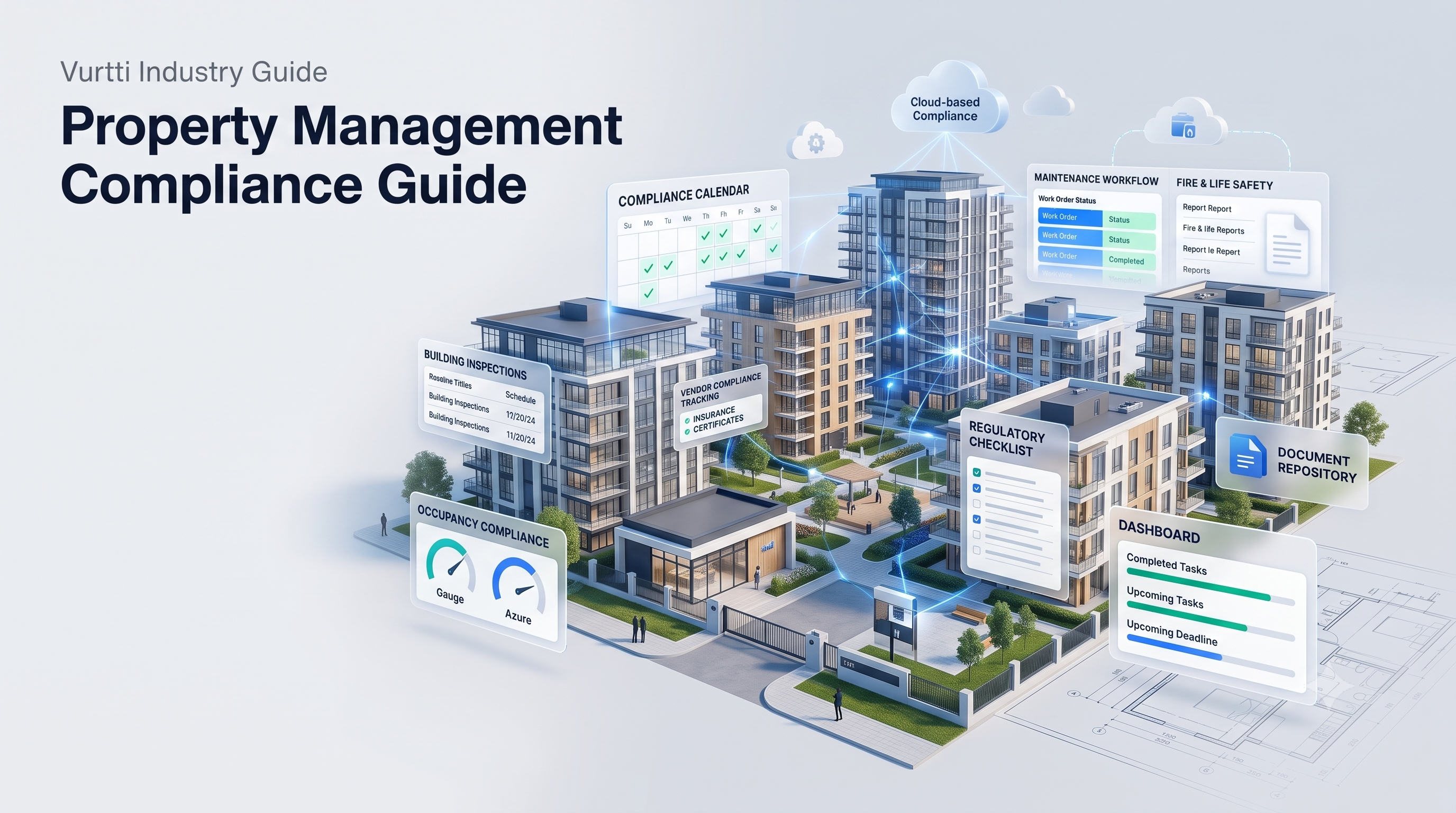
Property Management Compliance Guide
A practical guide to managing regulatory requirements, property obligations, and recurring compliance tasks across residential and commercial properties.
Introduction
Property management involves much more than collecting rent and maintaining buildings. Property managers and owners must navigate a wide range of legal, regulatory, and operational requirements while ensuring properties remain safe, compliant, and well-maintained. From fair housing laws and property inspections to vendor contracts and insurance renewals, staying organized is essential to reducing risk and protecting both residents and property owners.
As portfolios grow, so do compliance responsibilities. A structured compliance program helps property management companies maintain accountability, improve operational efficiency, and avoid costly penalties caused by missed deadlines or overlooked requirements.
What Is Property Management Compliance?
Property management compliance is the process of ensuring that residential, commercial, and mixed-use properties operate in accordance with applicable federal, state, and local laws, housing regulations, licensing requirements, contractual obligations, and company policies.
Compliance extends across every stage of property management—from leasing and resident communications to maintenance, inspections, financial reporting, and vendor oversight. A proactive approach helps organizations protect residents, preserve property value, and minimize legal and financial risk.
Key Areas of Property Management Compliance
While requirements vary by jurisdiction and property type, most property management organizations should actively monitor:
Fair housing and equal housing opportunity requirements
Property inspections and safety checks
Building code compliance
Fire and life safety inspections
Business and property licenses
Vendor contracts and insurance certificates
Employee training and certifications
Lease documentation and recordkeeping
Maintenance schedules and work order compliance
Regulatory reporting and documentation
Managing these recurring obligations in one place helps organizations maintain consistency across every property they oversee.
Common Compliance Challenges
Property managers often oversee multiple communities, buildings, vendors, and employees simultaneously. Without centralized systems, compliance responsibilities can become scattered across spreadsheets, calendars, email reminders, paper files, and property management software.
Common challenges include:
Missed inspection deadlines
Expired vendor insurance certificates
Incomplete maintenance documentation
Outdated lease records
Tracking recurring compliance obligations across multiple properties
Coordinating responsibilities among onsite staff, regional managers, and vendors
Preparing documentation during audits or legal disputes
As portfolios expand, manual tracking becomes increasingly difficult and introduces unnecessary risk.
Best Practices for Property Management Compliance
Successful property management companies establish standardized compliance processes that can be repeated across every property in their portfolio.
Organizations should:
Maintain a centralized compliance calendar
Assign ownership for every recurring compliance task
Schedule inspections well before regulatory deadlines
Maintain complete digital records for leases, inspections, and maintenance
Monitor vendor licenses and insurance renewals
Conduct periodic internal compliance reviews
Keep policies and procedures current with changing regulations
A proactive approach reduces surprises and helps teams respond more effectively when inspections or audits occur.
How Technology Supports Property Management Compliance
Modern compliance technology helps property management companies move beyond manual tracking by centralizing deadlines, documentation, inspections, recurring tasks, and reporting.
Instead of relying on multiple spreadsheets or individual calendars, organizations can automate reminders, assign ownership, store supporting documentation, and monitor compliance activities across every property from one platform.
This improved visibility allows managers to identify potential issues before they become costly compliance violations.
How Vurtti Helps
Vurtti helps property management organizations centralize recurring compliance responsibilities across their entire portfolio. From inspection schedules and vendor documentation to licensing renewals and policy management. Vurtti provides a single platform for tracking obligations, assigning ownership, and maintaining supporting records.
With automated reminders, secure document management, customizable workflows, and real-time dashboards, Vurtti enables property managers to stay organized, reduce administrative burden, and improve compliance across every property they manage.
Final Takeaway
Property management compliance is an ongoing process that requires organization, accountability, and consistent execution. By centralizing compliance activities, maintaining accurate documentation, and monitoring recurring obligations throughout the year, organizations can reduce operational risk while providing safer, more efficient communities for residents and property owners alike.
Compliance should never be an afterthought. With the right processes and technology, property management companies can transform compliance from a reactive task into a proactive operational advantage.