Why Excel Is No Longer Enough for Compliance Management
Discover why organizations are moving beyond spreadsheets and adopting intelligent compliance management platforms to reduce risk, improve visibility, and stay audit-ready.
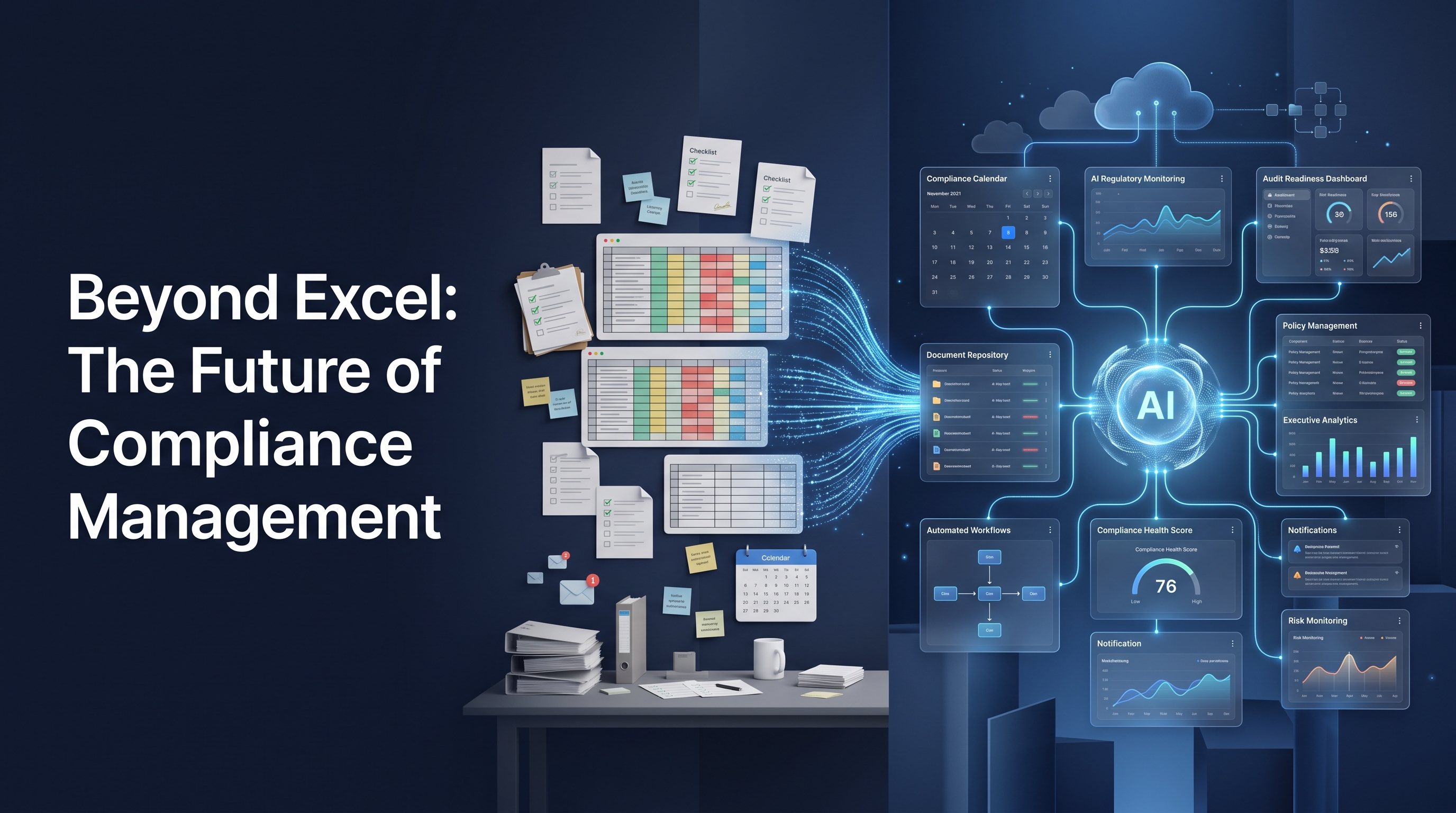
Introduction
For years, Microsoft Excel has been the default tool for managing compliance activities. Organizations have used spreadsheets to track deadlines, maintain compliance calendars, document audits, and monitor regulatory requirements. While Excel is flexible, familiar, and inexpensive, it was never designed to manage the growing complexity of modern compliance programs.
As organizations expand, regulations evolve, and compliance obligations multiply, spreadsheets often become difficult to maintain, prone to human error, and increasingly disconnected from day-to-day operations. Today's compliance landscape requires greater visibility, automation, collaboration, and accountability than spreadsheets alone can provide.
Why Organizations Still Use Excel
Excel remains popular because it is widely available, easy to customize, and requires little training. Small organizations often begin their compliance programs with a spreadsheet because it offers a quick way to organize deadlines and responsibilities.
Common uses include:
Compliance calendars
License tracking
Audit checklists
Training records
Document inventories
Policy review schedules
Vendor tracking
Regulatory reporting logs
For organizations with only a few recurring obligations, Excel may be sufficient. However, as compliance programs mature, its limitations become increasingly apparent.
The Limitations of Spreadsheet-Based Compliance
Spreadsheets were designed for calculations and data organization—not enterprise compliance management. As compliance responsibilities grow, organizations often encounter several common challenges.
Limited Collaboration
Multiple versions of the same spreadsheet can quickly circulate across departments, making it difficult to determine which version is current. Simultaneous editing and inconsistent updates can create confusion and increase the risk of missed obligations.
Manual Processes
Most spreadsheet-based compliance programs rely on manual data entry, recurring reminders, and individual oversight. Every deadline, ownership change, or regulatory update requires someone to make manual updates.
Limited Visibility
Leadership often lacks a real-time view of organizational compliance. Instead of dashboards and automated reporting, teams spend valuable time collecting information from multiple spreadsheets before generating executive reports.
Higher Risk of Human Error
Simple mistakes—such as incorrect formulas, accidental deletions, duplicate records, or missed updates—can lead to inaccurate reporting and overlooked compliance obligations.
Difficult Audit Preparation
Preparing for an audit frequently requires gathering information from multiple spreadsheets, shared drives, email conversations, and paper files. This fragmented approach increases preparation time and makes it more difficult to demonstrate compliance.
What Modern Compliance Management Looks Like
Today's compliance programs require more than a digital checklist. Modern compliance management platforms centralize compliance activities within a single system that supports collaboration, automation, and continuous visibility.
Instead of relying on disconnected spreadsheets, organizations can manage:
Compliance calendars
Regulatory updates
Policy management
Document repositories
Audit evidence
Employee training
Task assignments
Executive dashboards
Automated reminders
Compliance reporting
With everything connected in one platform, organizations gain a clearer picture of their overall compliance posture.
The Benefits of Moving Beyond Excel
Transitioning from spreadsheets to a dedicated compliance platform provides several operational advantages.
Organizations can:
Automate recurring compliance tasks
Receive reminders before deadlines are missed
Assign ownership with clear accountability
Centralize documentation and audit evidence
Monitor compliance status in real time
Improve collaboration across departments
Reduce administrative workload
Generate executive reports instantly
Strengthen audit readiness
Scale compliance programs as the organization grows
Rather than spending time maintaining spreadsheets, compliance teams can focus on managing risk and improving governance.
The Role of AI
Artificial intelligence is further transforming compliance management by reducing manual effort and helping organizations make faster, more informed decisions.
AI can assist with:
Monitoring regulatory changes
Prioritizing compliance obligations
Organizing documentation
Identifying overdue tasks
Detecting compliance trends
Highlighting potential risks
Supporting audit preparation
Instead of simply recording information, modern platforms use AI to help organizations act on it.
How Vurtti Helps
Vurtti was built to replace disconnected spreadsheets with a centralized, AI-powered compliance management platform. Organizations can track recurring obligations, monitor regulatory updates, manage documentation, assign ownership, automate reminders, and measure compliance performance from one secure workspace.
By combining compliance calendars, workflow automation, document management, reporting, and intelligent insights, Vurtti helps organizations spend less time managing spreadsheets and more time building effective compliance programs.
Final Takeaway
Excel remains a valuable business tool, but compliance management has outgrown what spreadsheets alone can reliably support. As regulatory expectations increase and organizations become more complex, successful compliance programs require automation, collaboration, real-time visibility, and intelligent decision-making.
Moving beyond spreadsheets isn't simply a technology upgrade—it's a shift toward a more proactive, scalable, and resilient approach to compliance management. Organizations that embrace modern compliance platforms are better positioned to reduce risk, improve accountability, and remain prepared for whatever comes next.