How AI is Changing Compliance Management
Discover how artificial intelligence is transforming compliance management by automating routine tasks, improving decision-making, and helping organizations stay ahead of evolving regulatory requirements.
Introduction
Compliance management has traditionally relied on manual processes, spreadsheets, email reminders, and disconnected systems to track regulatory obligations and maintain documentation. While these methods may work for smaller organizations, they often become difficult to manage as businesses grow, regulations evolve, and compliance responsibilities expand.
Artificial intelligence (AI) is changing this landscape. Rather than replacing compliance professionals, AI serves as a powerful assistant that helps organizations automate repetitive tasks, identify potential risks, monitor regulatory changes, and make faster, more informed decisions. The result is a more proactive, efficient, and resilient approach to compliance management.
Why Traditional Compliance Is Becoming More Challenging
Modern organizations face an increasing number of compliance obligations across multiple jurisdictions, departments, and regulatory frameworks. Teams are expected to monitor changing regulations, maintain accurate documentation, prepare for audits, and demonstrate ongoing compliance—all while balancing day-to-day business operations.
Common challenges include:
Monitoring regulatory changes
Managing recurring deadlines
Organizing compliance documentation
Tracking employee certifications and training
Preparing for audits
Coordinating responsibilities across departments
Identifying compliance gaps before they become problems
As compliance programs become more complex, organizations need tools that can scale alongside their operations.
How AI Is Transforming Compliance
Artificial intelligence helps organizations move from reactive compliance management to proactive compliance operations. By analyzing large volumes of information and automating routine processes, AI enables compliance teams to spend less time on administrative work and more time focusing on strategic initiatives.
Some of the most impactful applications of AI include:
Regulatory Monitoring
AI can continuously monitor regulatory agencies, government websites, and trusted industry sources for new laws, policy changes, and guidance. Instead of manually reviewing dozens of websites, compliance teams receive timely notifications when updates may affect their organization.
Intelligent Task Automation
AI can automatically create recurring compliance tasks, assign owners, generate reminders, and recommend priorities based on deadlines, regulatory impact, and organizational risk.
Document Organization
Rather than storing files across multiple systems, AI can classify documents, identify missing information, suggest metadata, and organize records so they are easier to retrieve during audits or inspections.
Audit Readiness
AI can help identify incomplete documentation, overdue obligations, missing approvals, or outstanding corrective actions before an audit begins. This allows organizations to address potential issues proactively rather than reacting under pressure.
Compliance Insights
By analyzing trends across compliance activities, AI can identify recurring issues, predict future bottlenecks, and provide recommendations for improving operational efficiency.
Benefits of AI-Powered Compliance Management
Organizations adopting AI-powered compliance solutions often experience improvements in both operational efficiency and overall governance.
Potential benefits include:
Reduced administrative workload
Faster identification of regulatory changes
Improved accuracy and consistency
Better visibility into compliance activities
Stronger audit preparedness
Enhanced collaboration across departments
More informed executive decision-making
Reduced risk of missed deadlines and overlooked obligations
AI does not eliminate the need for compliance professionals—it enables them to work more strategically.
The Human Element Remains Essential
While AI can automate repetitive tasks and analyze vast amounts of information, human expertise remains essential for interpreting regulations, making ethical decisions, managing organizational culture, and exercising professional judgment.
The most effective compliance programs combine intelligent technology with experienced compliance professionals. AI supports decision-making; it does not replace accountability.
How Vurtti Uses AI
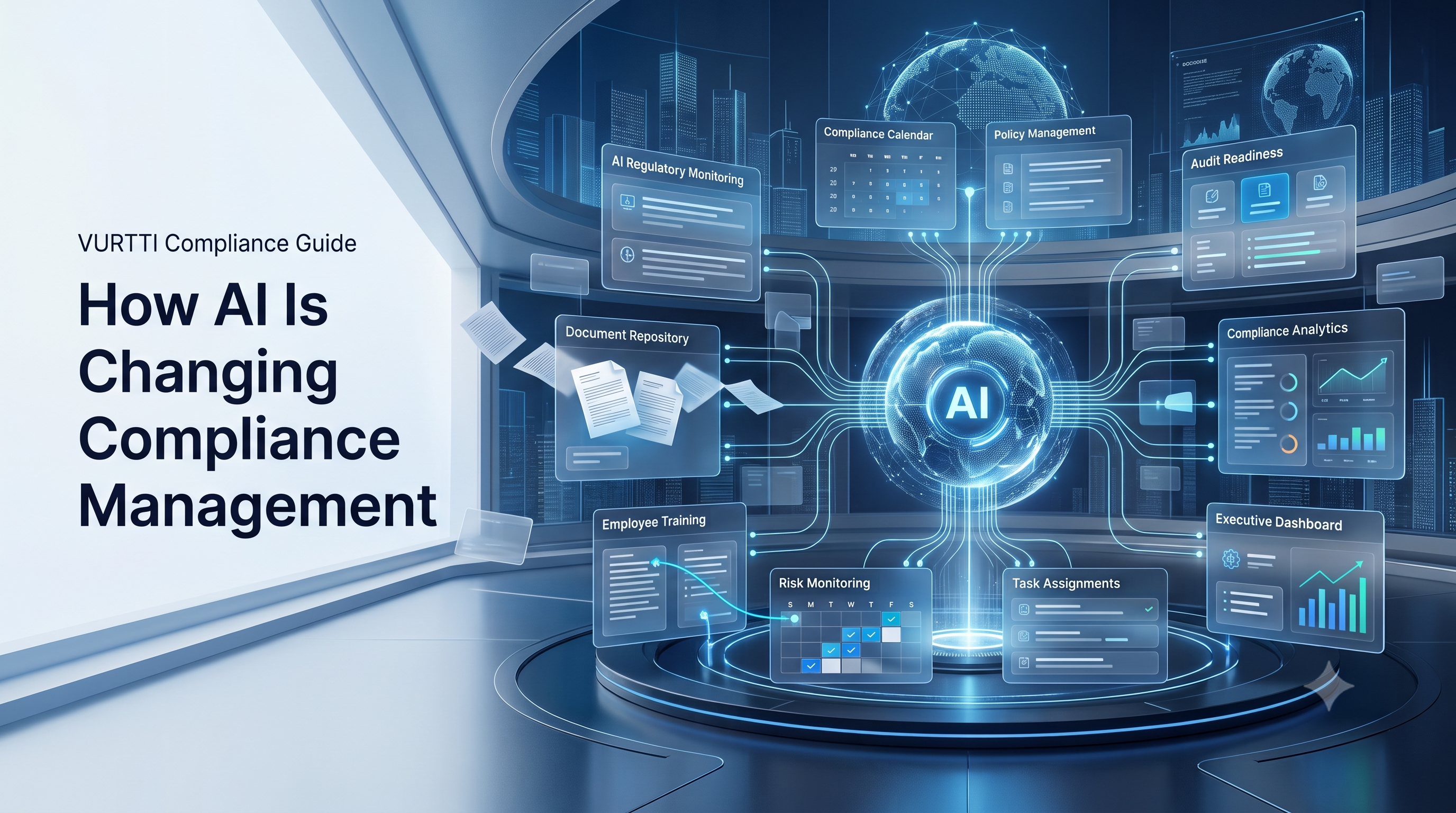
Vurtti is designed to bring AI directly into the compliance management process. By combining regulatory monitoring, recurring obligation tracking, document management, workflow automation, and intelligent reporting within a single platform, Vurtti helps organizations simplify complex compliance responsibilities.
Rather than requiring teams to manage multiple spreadsheets, disconnected reminders, and scattered documentation, Vurtti centralizes compliance operations while using AI to surface important information, automate routine workflows, and improve visibility across the organization.
As AI capabilities continue to evolve, Vurtti is positioned to help organizations transform compliance from a reactive administrative function into a proactive operational advantage.
Looking Ahead
The future of compliance management is increasingly intelligent, automated, and data-driven. Organizations that embrace AI today will be better equipped to adapt to changing regulations, manage growing compliance responsibilities, and improve operational resilience.
Artificial intelligence is not changing the purpose of compliance—it is changing how compliance is managed. By reducing manual effort and delivering actionable insights, AI empowers organizations to focus less on chasing deadlines and more on building strong governance, reducing risk, and achieving long-term success.