How to Build a Compliance Program From Scratch
A step-by-step guide to designing a practical, scalable compliance program that reduces risks, supports growth, and helps your organization stay audit-ready.
Introduction
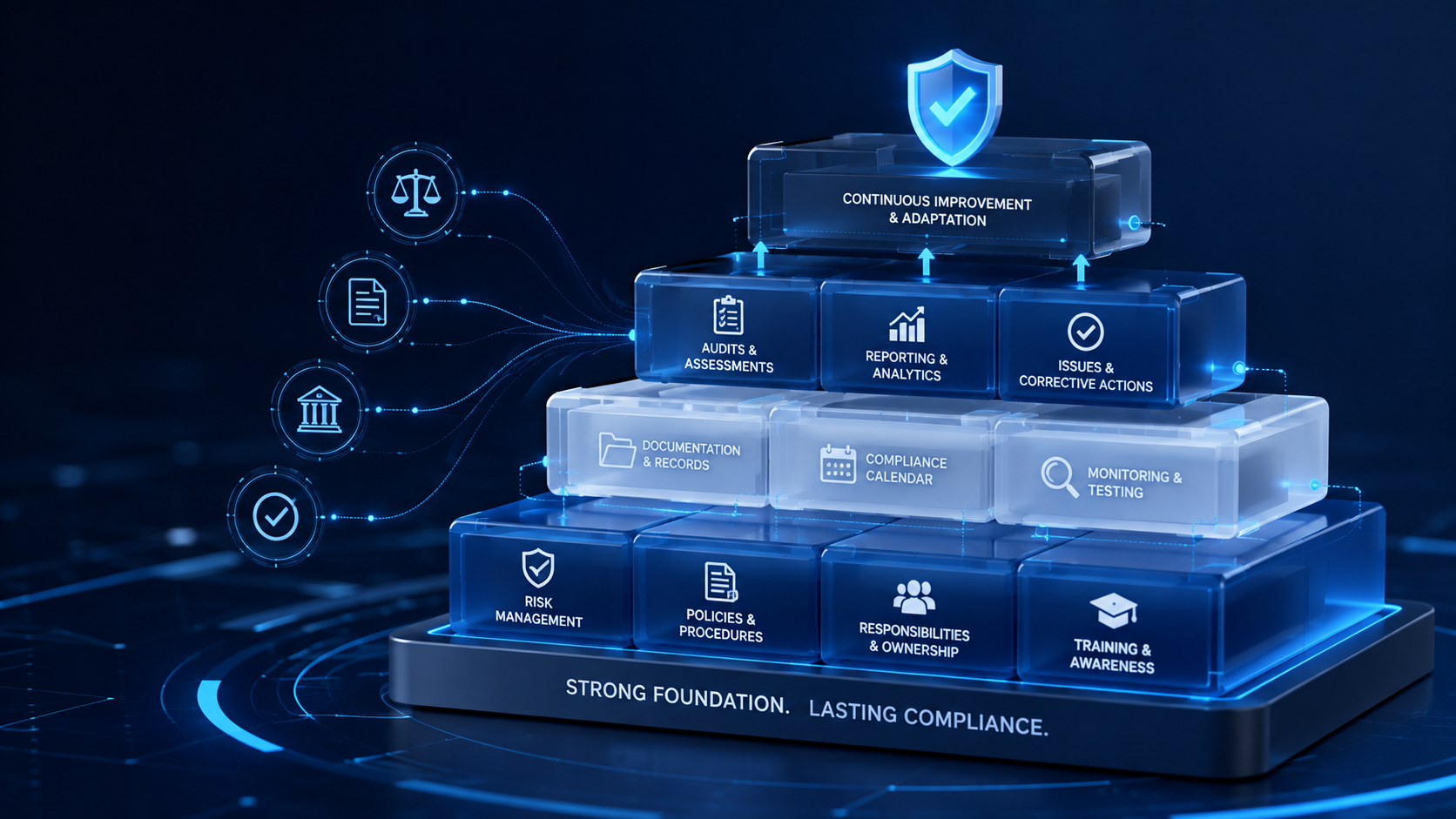
Building a compliance program from scratch may seem overwhelming, especially for growing organizations that are balancing regulatory requirements with day-to-day operations. However, an effective compliance program doesn't need to be overly complex to be successful. The goal is to create a structured framework that helps your organization identify its obligations, assign accountability, monitor ongoing requirements, and continuously improve over time.
Whether you're launching a startup, expanding into a regulated industry, or formalizing an existing process, a well-designed compliance program provides the foundation for long-term operational success.
Step 1: Understand Your Compliance Requirements
Before creating policies or assigning responsibilities, identify the laws, regulations, industry standards, and contractual obligations that apply to your organization. These requirements will vary depending on your industry, geographic locations, business activities, and the services you provide.
Start by asking questions such as:
Which federal, state, or local regulations apply?
Are there industry-specific standards we must follow?
What licenses or certifications are required?
Do customer or vendor contracts include compliance obligations?
What reporting or recordkeeping requirements exist?
Creating a complete inventory of applicable requirements provides the roadmap for your compliance program.
Step 2: Assign Ownership
Every compliance obligation should have a clearly identified owner. Without accountability, even well-documented compliance programs can fail due to missed deadlines or inconsistent execution.
Assign responsibility to individuals or departments that are best positioned to manage specific requirements. Leadership should also define escalation procedures and designate backup owners for critical compliance activities.
Clear ownership creates transparency and ensures that important tasks are not overlooked.
Step 3: Develop Policies and Procedures
Policies establish your organization's expectations, while procedures explain how those expectations are carried out. Together, they provide consistency across departments and help employees understand their responsibilities.
Organizations should prioritize policies covering areas such as:
Code of Conduct
Information Security
Data Privacy
Record Retention
Incident Reporting
Vendor Management
Employee Training
Acceptable Use of Technology
Policies should be reviewed regularly to ensure they remain aligned with changing regulations and business operations.
Step 4: Create a Compliance Calendar
Many compliance obligations recur on a monthly, quarterly, annual, or multi-year basis. A centralized compliance calendar helps organizations monitor deadlines, inspections, certifications, reporting requirements, and policy reviews before they become urgent.
Your compliance calendar should include:
Compliance obligation
Due date
Responsible owner
Frequency
Required documentation
Reminder schedule
Completion status
A proactive calendar helps organizations shift from reacting to deadlines to planning for them.
Step 5: Organize Documentation
Documentation is the evidence that demonstrates compliance. Every completed activity should be supported by organized records that can be easily retrieved during audits, inspections, or internal reviews.
Common documentation includes:
Policies and procedures
Licenses and permits
Training records
Audit reports
Inspection reports
Contracts
Certifications
Regulatory filings
Incident reports
Centralizing documentation reduces administrative effort while improving audit readiness.
Step 6: Train Employees
A compliance program is only effective if employees understand their responsibilities. Regular training helps staff recognize compliance requirements, follow organizational policies, and respond appropriately when issues arise.
Training should be provided during onboarding and reinforced through periodic refresher sessions. Organizations should also maintain records documenting participation and completion.
Creating a culture where employees understand the importance of compliance is just as important as developing policies.
Step 7: Monitor and Review
Compliance is not a one-time project. Regulations evolve, organizations grow, and business processes change. Regular monitoring ensures that compliance activities remain effective and aligned with current requirements.
Organizations should periodically review:
Upcoming deadlines
Overdue obligations
Policy effectiveness
Documentation quality
Employee training completion
Audit findings
Regulatory updates
Routine reviews help identify gaps before they become larger compliance issues.
Step 8: Use Technology to Scale
As organizations grow, spreadsheets and manual reminders often become difficult to maintain. Modern compliance platforms simplify recurring obligations by centralizing documentation, assigning ownership, automating reminders, and providing leadership with real-time visibility into compliance performance.
Technology enables organizations to spend less time managing administrative tasks and more time focusing on strategic compliance initiatives.
How Vurtti Helps
Vurtti helps organizations build and maintain compliance programs through one centralized platform. Compliance calendars, documentation, recurring tasks, audit readiness, regulatory updates, and reporting are managed together, giving organizations greater visibility and control over their compliance operations.
Whether you're creating your first compliance program or improving an existing one, Vurtti provides the tools needed to simplify compliance management while reducing administrative burden.
Final Takeaway
Building a compliance program from scratch doesn't require implementing every process at once. Successful organizations begin by understanding their obligations, assigning ownership, documenting expectations, and creating repeatable workflows that can grow alongside the business.
By investing in strong governance, organized documentation, employee education, and modern compliance technology, organizations can establish a proactive compliance culture that supports operational excellence and long-term success.
A strong compliance program isn't simply about meeting today's requirements—it's about creating a scalable foundation that prepares your organization for tomorrow's challenges.