Audit Readiness Guide: How to Prepare for a Successful Audit
Learn how to build an audit-ready organization by maintaining organized documentation, strengthening accountability, and preparing for compliance reviews before they happen.
Introduction
For many organizations, the word audit brings uncertainty and stress. In reality, audits should not be viewed as one-time events but as opportunities to demonstrate that your organization operates responsibly, follows established processes, and meets its regulatory and contractual obligations.
The most successful organizations don't prepare for audits a few weeks before they occur—they stay audit-ready throughout the year. By maintaining organized records, assigning clear ownership, and regularly reviewing compliance activities, organizations can reduce disruption and approach audits with confidence.
What Is Audit Readiness?
Audit readiness is the ability to quickly demonstrate that your organization complies with applicable laws, regulations, internal policies, and contractual requirements. It means having accurate documentation, clearly defined processes, and evidence that compliance activities are being performed consistently.
Whether you're preparing for an internal review, regulatory inspection, customer assessment, or third-party certification, audit readiness begins long before the auditor arrives.
The Foundations of Audit Readiness
Organizations that consistently perform well during audits typically focus on a few core principles:
Maintain organized and up-to-date documentation.
Assign clear ownership for compliance activities.
Track recurring obligations and deadlines.
Review policies and procedures regularly.
Retain evidence of completed compliance activities.
Conduct periodic internal reviews to identify gaps early.
These practices help reduce last-minute preparation and improve confidence during the audit process.
Common Audit Challenges
Many audit findings stem from organizational issues rather than intentional noncompliance. Common challenges include missing documentation, outdated policies, inconsistent recordkeeping, unclear ownership, and difficulty locating supporting evidence.
When compliance information is spread across emails, spreadsheets, paper files, and multiple departments, preparing for an audit becomes significantly more time-consuming.
Best Practices for Staying Audit Ready
Organizations can strengthen their audit readiness by adopting proactive habits instead of reactive ones.
Establish a Centralized Repository
Store policies, licenses, certifications, training records, contracts, and supporting documentation in a secure, organized location.
Monitor Compliance Throughout the Year
Regularly review upcoming deadlines, completed activities, and outstanding obligations rather than waiting until an audit is scheduled.
Document Everything
If an activity is completed, maintain evidence that demonstrates when it occurred, who completed it, and any required approvals.
Conduct Internal Assessments
Periodic self-assessments help identify gaps before external auditors do, allowing organizations to correct issues proactively.
How Technology Supports Audit Readiness
Modern compliance platforms simplify audit preparation by centralizing documentation, tracking recurring obligations, assigning accountability, and maintaining complete audit trails.
Instead of collecting evidence from multiple systems, organizations can quickly retrieve the information needed to demonstrate compliance. This not only saves time but also improves consistency and reduces the risk of missing critical documentation.
How Vurtti Helps
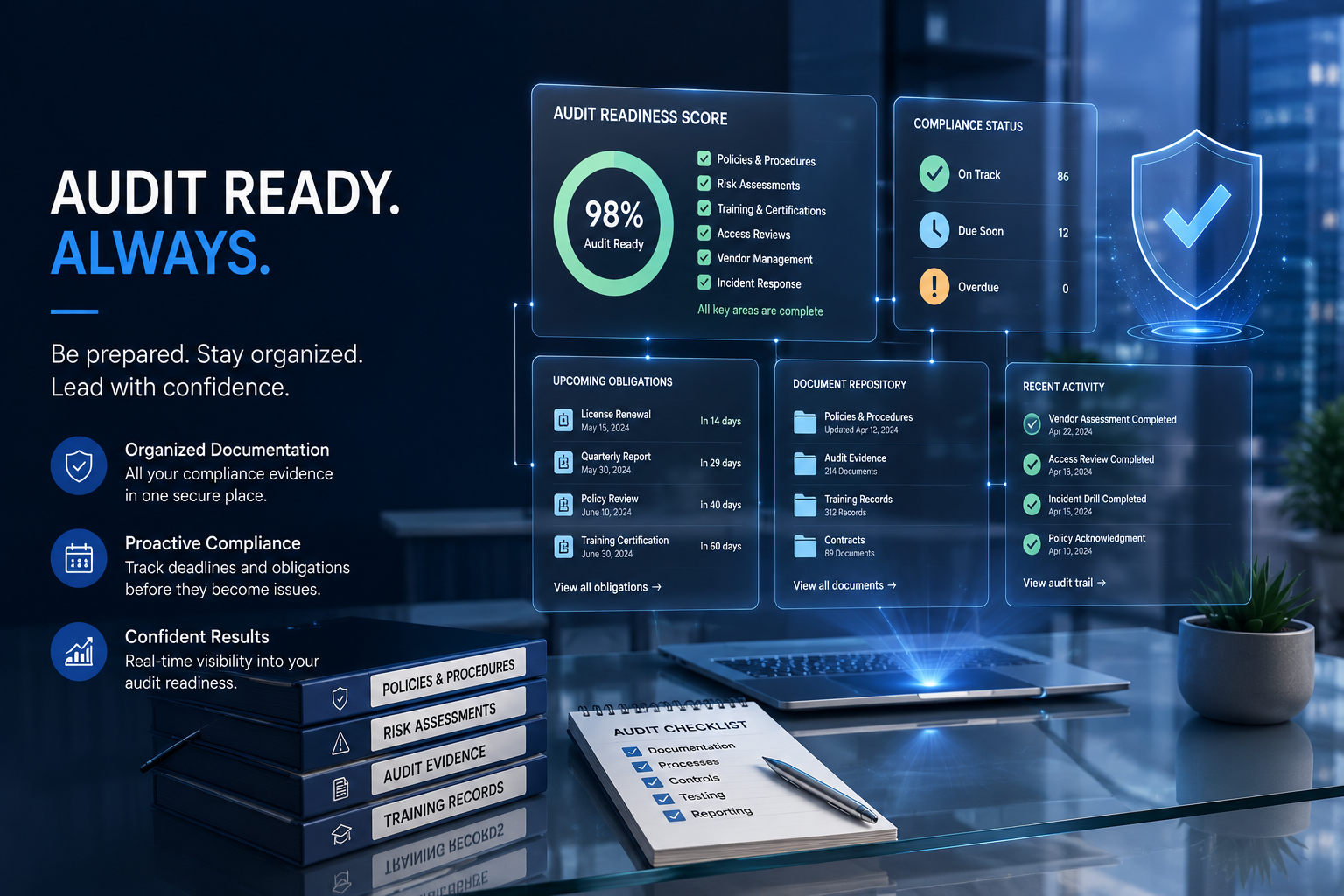
Vurtti helps organizations build a culture of continuous audit readiness. By centralizing compliance obligations, documentation, deadlines, and task ownership in one platform, teams gain greater visibility into their compliance activities throughout the year.
With automated reminders, secure document management, audit trails, and real-time reporting, Vurtti helps organizations prepare for audits with confidence while reducing the administrative burden associated with manual compliance tracking.
Final Takeaway
Audit readiness is not achieved through last-minute preparation—it is built through consistent processes, organized documentation, and proactive compliance management. Organizations that maintain accurate records, monitor recurring obligations, and review their compliance activities regularly are better positioned to respond confidently to audits and reduce operational risk.
Strong audit readiness isn't simply about passing an inspection. It's about creating a well-managed organization that can demonstrate accountability, transparency, and operational excellence every day.