Compliance Calendar Guide: How to Organize, Track, and Manage Compliance Deadlines
A practical guide to building a compliance calendar that keeps obligations organized, improves accountability, and helps your organization stay ahead of critical deadlines.
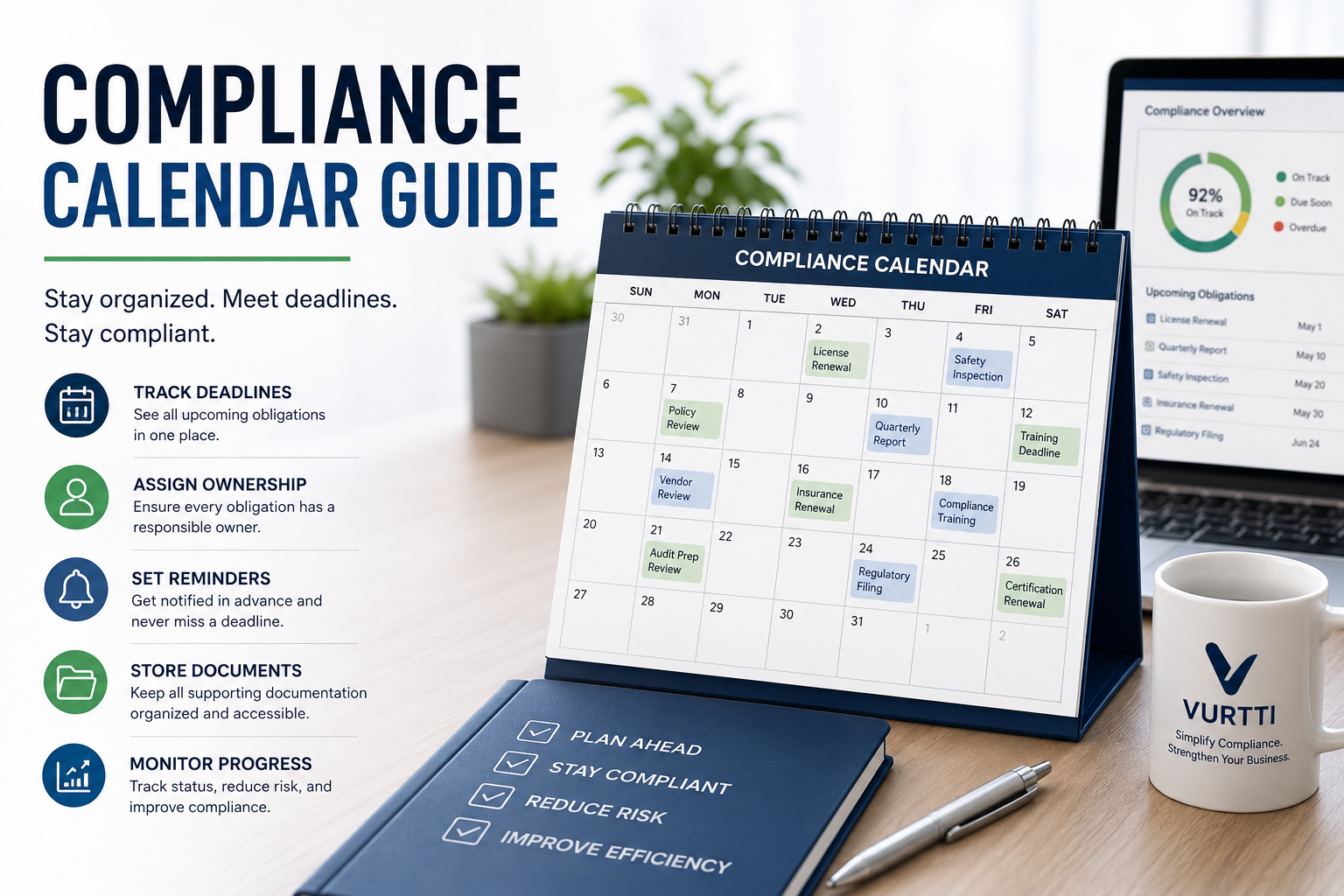
What Is a Compliance Calendar?
A compliance calendar is a centralized system for tracking regulatory, licensing, contractual, and internal compliance obligations. Unlike a traditional calendar that simply records dates, an effective compliance calendar connects each deadline with the people, documentation, and actions required to complete it.
Organizations may need to manage dozens or even hundreds of recurring requirements throughout the year. Without a centralized process, these responsibilities can become scattered across spreadsheets, emails, shared calendars, and individual employees.
A compliance calendar provides one clear view of what needs to happen, when it needs to happen, and who is responsible.
What Should You Track?
The requirements included in a compliance calendar will vary depending on the organization's industry, location, and operations. Common obligations include:
Regulatory filings and reports
Business and professional license renewals
Employee certifications and required training
Insurance renewals
Internal and external audits
Inspections and safety requirements
Policy reviews and acknowledgments
Vendor and contract renewals
Cybersecurity assessments
Continuing education requirements
Each obligation should include a due date, responsible owner, recurrence schedule, status, and any supporting documentation needed to demonstrate completion.
Create Accountability
One of the most important parts of compliance management is establishing ownership. A deadline that exists on a calendar but has no clearly responsible person can easily be overlooked.
Every significant obligation should identify who is responsible for completing it. Organizations should also consider backup ownership and escalation procedures for important requirements. This becomes particularly valuable during employee absences, turnover, or organizational changes.
Plan Before the Deadline
The regulatory deadline should not always be the organization's working deadline. Some obligations require weeks of preparation, documentation, approvals, or coordination before they can be completed.
Organizations can create internal milestones such as:
90 days before: Begin preparation for complex requirements.
60 days before: Gather documentation and confirm ownership.
30 days before: Review progress and resolve outstanding issues.
7 days before: Confirm that the requirement is ready for completion.
Due date: Complete and document the obligation.
This approach transforms compliance from a last-minute activity into a predictable business process.
Connect Documentation to Compliance
Completing an obligation is only part of the process. Organizations may later need to prove that it was completed.
Licenses, certificates, inspection reports, training records, approval documents, and other supporting evidence should be connected to the applicable compliance requirement whenever possible.
Maintaining this documentation throughout the year can significantly improve audit readiness and reduce the time employees spend searching for records.
Review Your Calendar Regularly
A compliance calendar should evolve with the organization. Regulations change, employees change roles, contracts are renewed, and new requirements emerge.
Regular reviews can help organizations identify:
Upcoming deadlines
Overdue obligations
Missing documentation
Unassigned responsibilities
Repeated delays
New or changing requirements
These reviews also provide leadership with better visibility into the organization's overall compliance activities.
Moving Beyond Spreadsheets
Spreadsheets and traditional calendars can work when an organization has relatively few obligations. As compliance responsibilities increase, however, manual systems become harder to maintain.
Modern compliance technology can automate recurring deadlines, send reminders, assign responsibilities, maintain documentation, create audit trails, and provide leadership with real-time reporting.
The goal is not simply to digitize a calendar. It is to create a system that actively helps the organization manage compliance.
How Vurtti Helps
Vurtti helps organizations centralize compliance obligations, deadlines, ownership, and documentation within one platform.
Organizations can use Vurtti to:
Track recurring compliance requirements
Automate reminders and notifications
Assign ownership and accountability
Maintain supporting documentation
Monitor upcoming and overdue obligations
Improve audit readiness
Gain greater visibility into compliance operations
By replacing disconnected spreadsheets and reminders with a centralized compliance system, organizations can move from reacting to deadlines to managing them proactively.
Final Takeaway
A well-designed compliance calendar gives organizations visibility into what must be completed, when it is due, and who is responsible. More importantly, it creates a repeatable process for staying ahead of obligations rather than responding after deadlines become urgent.
Start by identifying your most important recurring requirements, assign clear ownership, establish reminders, maintain supporting documentation, and review the calendar regularly. As your compliance responsibilities grow, automation and centralized management can make that process significantly easier.
Compliance isn't just about remembering deadlines. It's about creating a system that makes those deadlines difficult to miss.