Compliance Guide 101: A Beginner's Guide to Building an Effective Compliance Program
Learn the fundamentals of compliance management, why it matters, and how organizations can build a sustainable compliance program that reduces risk and support long-term growth.
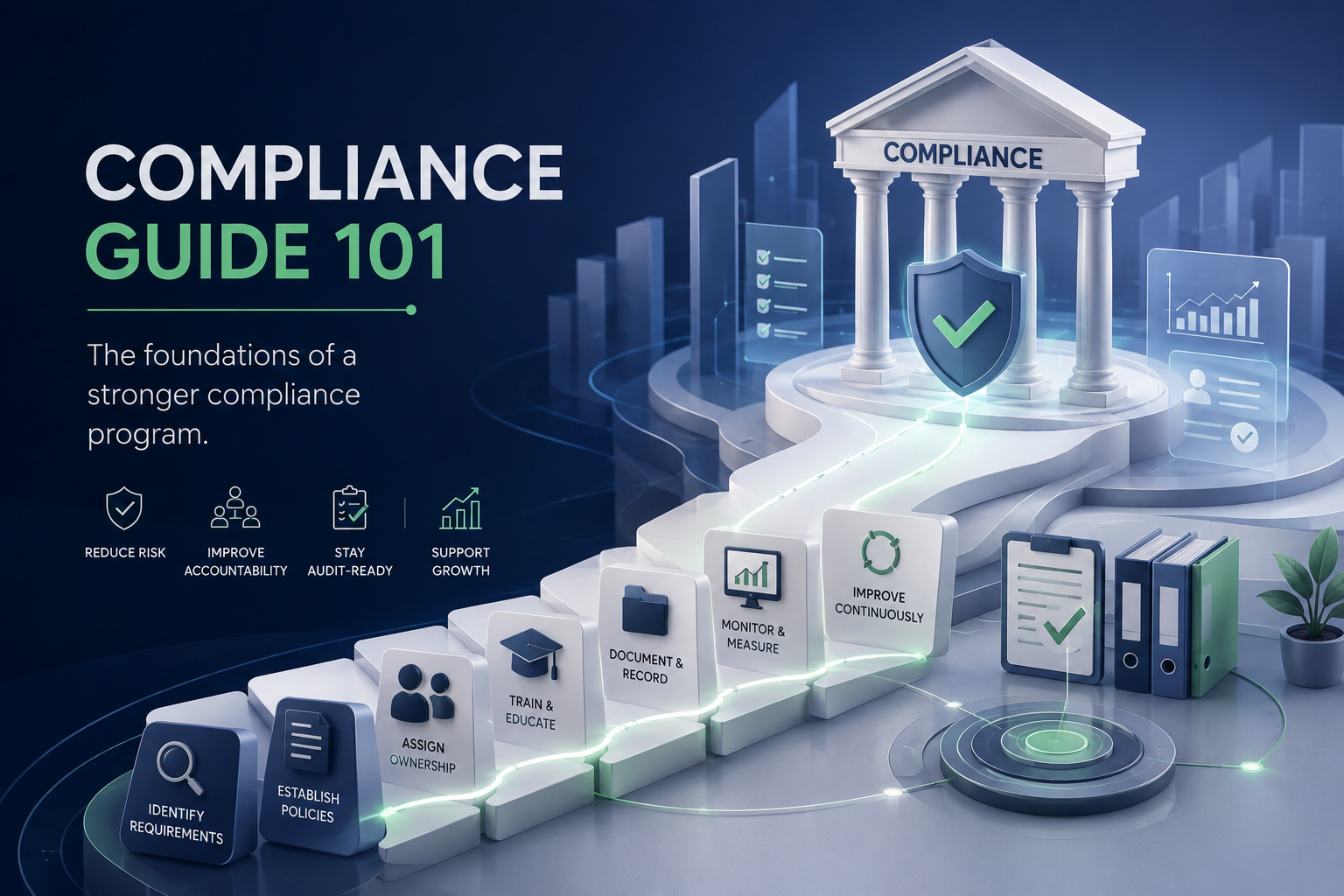
Introduction
Compliance is more than checking boxes or preparing for audits. It is the ongoing process of ensuring that an organization operates in accordance with applicable laws, regulations, industry standards, contractual obligations, and internal policies. Whether you're a small business or a large enterprise, effective compliance protects your organization from financial penalties, operational disruptions, legal exposure, and reputational damage.
This guide provides an overview of compliance management, explains why it matters, and outlines the essential components of a successful compliance program.
What Is Compliance?
Compliance is the process of meeting legal, regulatory, contractual, and organizational requirements.
Depending on your industry, compliance may involve:
Government regulations
Industry standards
Licensing requirements
Employee certifications
Data privacy laws
Safety requirements
Internal company policies
Customer or vendor contractual obligations
Rather than being a one-time project, compliance is a continuous business function that requires planning, accountability, monitoring, and documentation.
Why Compliance Matters
Organizations with strong compliance programs are better positioned to:
Reduce legal and regulatory risk
Avoid fines and penalties
Improve operational efficiency
Protect sensitive information
Build customer and stakeholder trust
Strengthen governance
Improve decision-making
Prepare for audits with confidence
Compliance also demonstrates that an organization takes its responsibilities seriously, which can enhance credibility with customers, partners, investors, and regulators.
Common Types of Compliance
Compliance requirements vary by organization, but many fall into several broad categories.
Regulatory Compliance
Requirements established by federal, state, local, or international regulatory agencies.
Examples include:
Data privacy regulations
Environmental regulations
Labor laws
Financial reporting requirements
Industry Compliance
Industry-specific standards that organizations must follow.
Examples include:
Healthcare
Financial services
Construction
Manufacturing
Education
Property management
Legal services
Internal Compliance
Policies and procedures established by an organization to promote consistency, ethics, and accountability.
Examples include:
Code of conduct
Information security policies
Procurement procedures
Employee handbook requirements
Contractual Compliance
Requirements agreed upon through customer, vendor, grant, or partnership contracts.
Examples include:
Reporting deadlines
Insurance requirements
Service-level agreements
Security obligations
The Five Pillars of an Effective Compliance Program
1. Governance
Every organization should establish clear ownership of compliance responsibilities.
This includes:
Leadership support
Defined responsibilities
Accountability
Oversight
2. Policies and Procedures
Policies define expectations.
Procedures explain how those expectations are met.
Organizations should regularly review and update both.
3. Training and Awareness
Employees cannot comply with requirements they do not understand.
Regular training helps ensure staff know:
Their responsibilities
Organizational policies
Reporting procedures
Regulatory expectations
4. Monitoring and Documentation
Compliance activities should be documented consistently.
Organizations should maintain records such as:
Licenses
Certifications
Audit reports
Policies
Employee acknowledgments
Inspection reports
Compliance evidence
5. Continuous Improvement
Compliance programs should evolve alongside the organization.
Organizations should:
Review processes regularly
Monitor regulatory changes
Conduct internal assessments
Improve workflows
Learn from audits and incidents
Common Compliance Challenges
Many organizations struggle with compliance because they rely on manual processes.
Common challenges include:
Missed deadlines
Spreadsheet tracking
Multiple disconnected systems
Unclear ownership
Poor documentation
Limited visibility
Regulatory changes
Manual reminders
These challenges increase as organizations grow.
Best Practices for Compliance Management
Organizations can strengthen compliance by adopting several proven practices.
Centralize Information
Store compliance documents, deadlines, and responsibilities in one location.
Assign Clear Ownership
Every obligation should have a responsible owner and backup owner.
Standardize Processes
Create repeatable workflows for recurring compliance activities.
Automate Routine Tasks
Use technology to automate reminders, recurring tasks, notifications, and reporting whenever possible.
Monitor Progress
Regularly review:
Upcoming deadlines
Overdue items
Risk areas
Completion rates
Documentation status
Stay Current
Monitor changes to laws, regulations, and industry standards that may affect your organization.
The Cost of Poor Compliance
Weak compliance programs often result in:
Regulatory fines
Legal expenses
Operational delays
Lost business opportunities
Failed audits
Reputational damage
Increased administrative costs
Reduced customer confidence
Many of these issues are preventable with organized processes and proactive planning.
How Technology Improves Compliance
Modern compliance platforms help organizations replace spreadsheets and disconnected reminders with centralized, automated workflows.
Technology can help organizations:
Track recurring obligations
Assign accountability
Store supporting documentation
Monitor deadlines
Generate reports
Improve audit readiness
Increase visibility across departments
As organizations grow, technology becomes an important tool for maintaining consistency and reducing manual effort.
How Vurtti Supports Compliance Management
Vurtti is designed to help organizations simplify and strengthen their compliance operations.
With Vurtti, organizations can:
Centralize compliance obligations
Manage recurring deadlines through an intelligent compliance calendar
Assign task ownership and accountability
Store compliance documentation securely
Monitor progress through dashboards and reporting
Improve audit readiness
Automate reminders and recurring workflows
By bringing compliance activities into a single platform, organizations gain better visibility, reduce administrative burden, and improve confidence in meeting their obligations.
Conclusion
An effective compliance program is built on organization, accountability, and continuous improvement. Rather than viewing compliance as a reactive task, successful organizations integrate it into their daily operations to reduce risk, improve efficiency, and support sustainable growth. Whether you're just beginning to formalize your compliance efforts or looking to modernize an existing program, building a strong foundation today can prevent costly problems tomorrow.
At Vurtti, we believe compliance should be proactive—not reactive—and we're committed to helping organizations simplify compliance through intelligent tools, practical guidance, and operational excellence.
Frequently Asked Questions
What is compliance management?
Compliance management is the ongoing process of ensuring an organization follows applicable laws, regulations, industry standards, contracts, and internal policies while documenting and monitoring those activities.
Who is responsible for compliance?
Compliance is a shared responsibility. Leadership establishes expectations, managers oversee compliance within their teams, and employees are responsible for following applicable policies and procedures.
Do small businesses need compliance programs?
Yes. Even small organizations must comply with employment laws, tax regulations, licensing requirements, contracts, insurance obligations, and other legal or industry-specific requirements.
How often should compliance activities be reviewed?
Organizations should monitor compliance continuously, review key obligations regularly, and evaluate their overall compliance program at least annually or whenever significant regulatory or operational changes occur.