Compliance Documentation & Recordkeeping Guide
Learn why effective documentation is the foundation of a successful compliance program and how proper recordkeeping helps organizations reduce risk, improve accountability, and stay audit-ready.
Introduction
A strong compliance program depends on more than meeting deadlines—it also requires maintaining accurate, organized, and accessible records. Documentation serves as evidence that an organization has fulfilled its legal, regulatory, contractual, and internal obligations. Without proper records, even completed compliance activities can be difficult to verify during an audit, inspection, or internal review.
Effective recordkeeping not only supports regulatory compliance but also improves operational efficiency, strengthens accountability, and provides leadership with confidence that important obligations are being managed consistently.
Why Documentation Matters
Every compliance activity should leave behind a clear record. Whether an organization renews a license, completes employee training, performs a safety inspection, or updates a policy, maintaining supporting documentation demonstrates that the activity occurred and was completed correctly.
Well-organized records help organizations:
Prepare for audits and inspections
Demonstrate regulatory compliance
Improve accountability across departments
Reduce time spent searching for information
Support investigations and internal reviews
Maintain business continuity during employee turnover
Good documentation transforms compliance from something employees remember into something the organization can prove.
What Should Be Documented?
The specific records an organization maintains will depend on its industry and regulatory requirements, but most compliance programs include documentation such as:
Policies and procedures
Licenses and permits
Employee training records
Certifications and continuing education
Audit reports
Inspection reports
Risk assessments
Contracts and vendor agreements
Insurance documentation
Incident reports
Regulatory filings
Compliance acknowledgments
Whenever possible, each record should be associated with the corresponding compliance obligation, making it easier to retrieve information when needed.
Best Practices for Recordkeeping
An effective recordkeeping process begins with consistency. Documents should be stored in a centralized location using standardized naming conventions and organized folders or categories. Access should be controlled so authorized personnel can retrieve information quickly while protecting sensitive data.
Organizations should also establish document retention policies that define how long records must be maintained and when they should be archived or securely disposed of. Retention requirements often vary depending on legal, regulatory, and contractual obligations.
Finally, documentation should be reviewed periodically to ensure records remain current, complete, and accurate.
Common Recordkeeping Challenges
Many organizations struggle with documentation because records become scattered across email inboxes, shared drives, paper files, and individual employee computers. As organizations grow, these disconnected systems make it increasingly difficult to locate important information quickly.
Common challenges include:
Missing or incomplete documentation
Duplicate or outdated files
Inconsistent naming conventions
Limited version control
Unclear ownership
Difficulty locating records during audits
Addressing these issues early can significantly improve compliance efficiency and reduce administrative burden.
How Technology Improves Recordkeeping
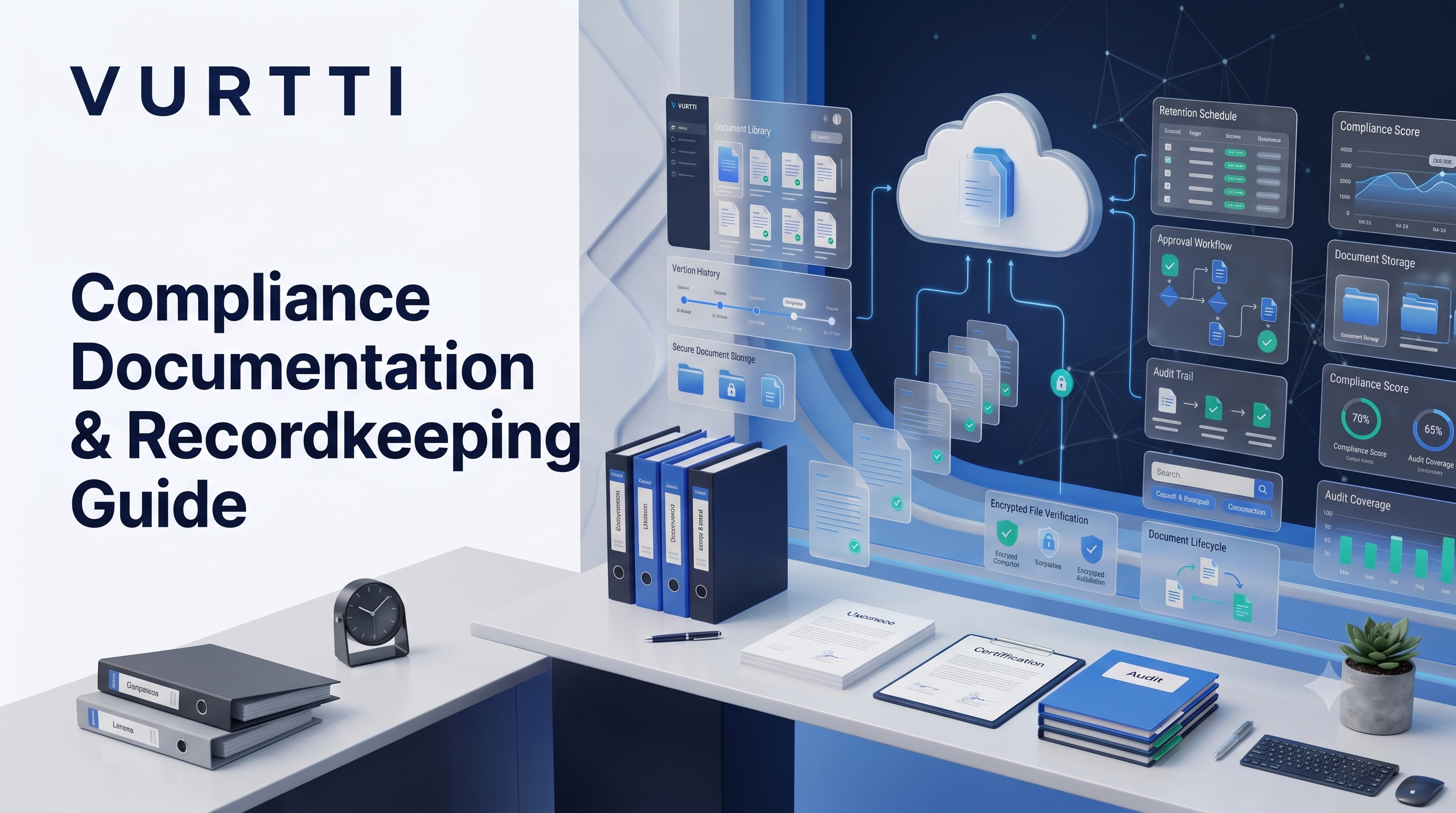
Modern compliance platforms simplify documentation management by centralizing records and connecting them directly to compliance activities. Instead of searching multiple locations for supporting evidence, organizations can quickly retrieve policies, certificates, approvals, inspection reports, and other records from a single platform.
Technology also provides version control, secure access, audit trails, automated reminders, and document retention capabilities that improve both compliance and operational efficiency.
How Vurtti Helps
Vurtti helps organizations centralize compliance documentation alongside recurring obligations, deadlines, and workflows. Supporting records can be securely stored, organized, and linked directly to the compliance activities they support, making information easier to locate during audits, inspections, and internal reviews.
With centralized document management, automated workflows, and real-time reporting, Vurtti helps organizations spend less time searching for records and more time focusing on proactive compliance management.
Final Takeaway
Documentation is the evidence that supports every compliance program. Organizations that maintain organized, accurate, and accessible records are better prepared for audits, better equipped to manage risk, and better positioned to demonstrate accountability.
Building strong recordkeeping practices today creates a stronger, more resilient compliance program tomorrow.